Pillow Design & Sleep Comfort
Inside Savvy Rest’s Soap-Shaped Latex Design: Airflow, Feel, and Side-Sleep Fit
A pillow can be a small study in compromise: soft enough to welcome the head, firm enough to keep it from sinking too far, and shaped to suit the sleeper rather than the display bed. Savvy Rest’s soap-shaped pillow approaches that problem with molded Dunlop latex and hollow channels intended to encourage airflow. Its simple outline is less a flourish than a clue to its priorities: support, ventilation, and a feel with some give.
Published November 23, 2026
A familiar shape, reconsidered
The name “soap-shaped” sounds almost comically plain, as if the pillow had been named after the first object someone noticed in a bathroom. Yet the shape is practical. A compact, softly rounded rectangle can offer a fairly even surface without the pronounced contours of a sculpted cervical pillow or the loose, shifting character of an overfilled down pillow. It is a form that keeps its ambitions modest: provide a place for the head, retain a measure of structure, and avoid turning bedtime into an exercise in adjustment.
In Savvy Rest’s version, the shape is made from molded Dunlop latex. The pillow’s description identifies hollow channels through the material as a way to help promote airflow, and presents the model as particularly suited to side sleepers. It also notes a removable organic cotton outer casing. Those details make a useful starting point for considering the pillow, but they do not settle the question of whether it will suit any particular sleeper. Pillow comfort is individual, and a material’s advertised qualities are not the same thing as a guarantee of a better night.
The pillow is available in standard, queen, and king dimensions. Its listed construction is straightforward: molded organic Dunlop latex, a removable cotton cover, and a shape intended for side sleeping. It does not advertise adjustable fill. The result is a design with a defined profile, which may appeal to someone who prefers a pillow that keeps its basic form rather than one that must be fluffed, kneaded, or altered as the night goes on.
What Dunlop latex brings to a pillow
Latex is often described as responsive. In ordinary terms, that means it tends to push back when compressed rather than simply collapsing beneath the head. The sensation can be springier and more buoyant than the slow, enveloping sink commonly associated with some memory foam pillows. That contrast matters less as a contest between materials than as a question of preference. Some sleepers like to feel held near the surface; others would rather settle more deeply into a cushion.
Dunlop is one way of manufacturing latex foam. The finished material’s feel depends on its formulation, density, shape, and construction, so the name alone cannot tell a sleeper exactly how firm a particular pillow will feel. In a molded pillow, the material is formed into a single shaped piece rather than gathered into loose clusters. That can give the pillow a more consistent outline than adjustable-fill designs, though it also means the sleeper cannot remove handfuls of filling to alter the loft.
“Responsive” does not mean “right for everyone.” Latex may feel supportive to one person and too springy or firm to another. A sleeper accustomed to a soft, compressible pillow may notice the difference immediately. Someone who values a pillow that rebounds instead of staying deeply indented may find that same quality welcome. The useful question is not whether latex is inherently superior, but whether its particular combination of resilience and structure suits the way you sleep.
Material labels also do not reveal every relevant detail. If a specific density, firmness measurement, or complete care instruction is important to your decision, consult the product information rather than infer it from the word “latex.” A pillow’s experience is shaped by more than its material family: dimensions, sleeping position, mattress firmness, body proportions, and the pillowcase or protector all enter the picture.
The channels and the question of airflow
The hollow channels are among the design’s most tangible features. They create open passages through the latex, intended to help air move through the pillow. In theory, a structure with more routes for circulation may feel less enclosed than a solid mass of foam. In practice, the sensation of warmth depends on several things at once: the pillow’s material and shape, the cover, the room’s temperature, the bedding around it, and the sleeper’s own experience of heat.
It is worth keeping the claim proportionate. Channels designed to promote airflow are not a promise that the pillow will remain cool in every climate or for every person. Nor do they establish that someone who sleeps warm will necessarily sleep better. They describe a construction feature and its purpose. Whether that feature makes a noticeable difference is something a buyer may need to judge through use, alongside the pillow’s feel and fit.
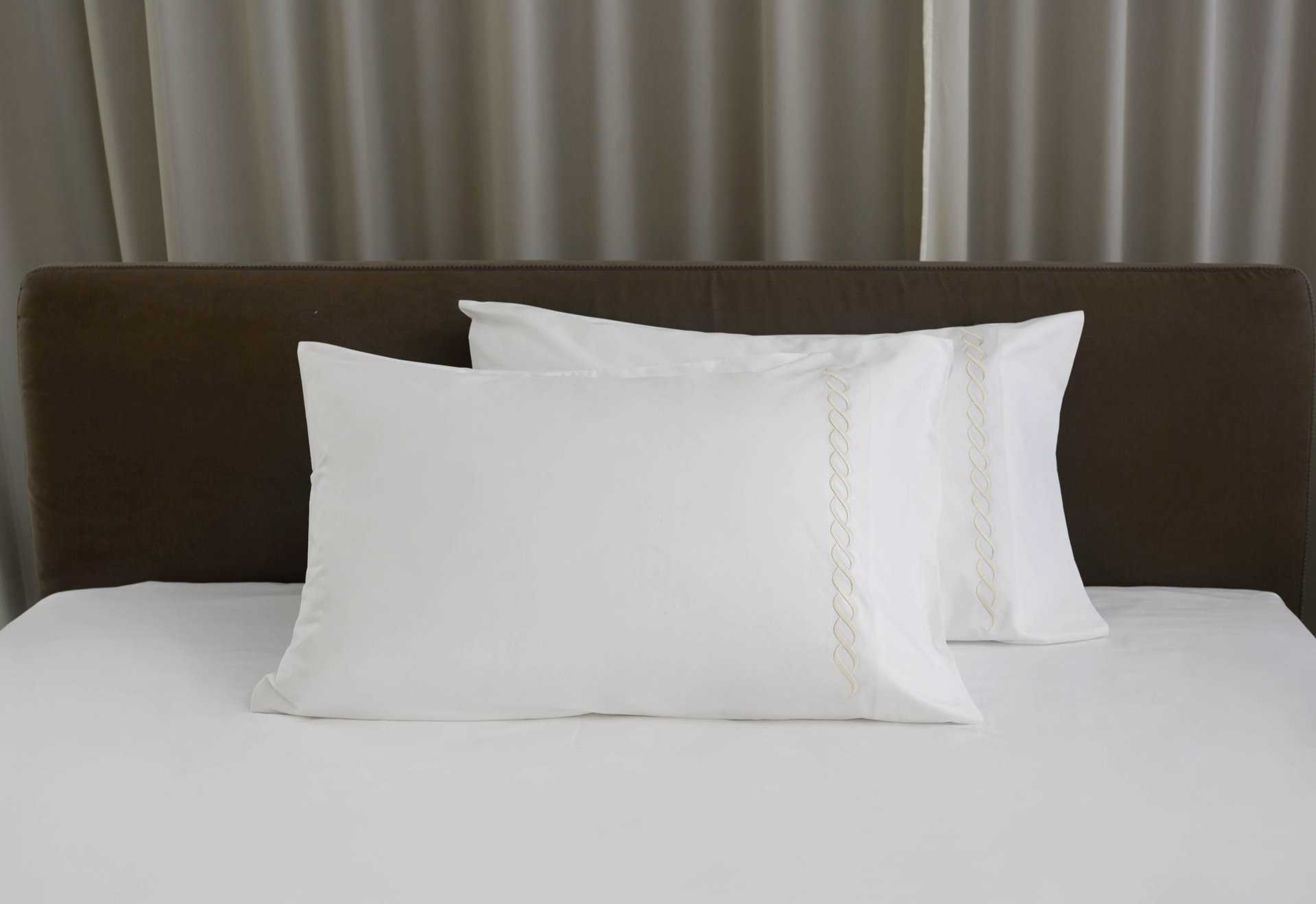
For people comparing pillows, it helps to distinguish ventilation in a fill from breathability at the surface. The molded latex and its channels describe the structure inside the pillow. The removable organic cotton casing is the textile layer against which a pillowcase sits. Both can matter to the overall experience, but they are not interchangeable properties. A pillow protector or tightly woven pillowcase may also change how the surface feels, so it is sensible to consider the whole arrangement rather than the fill alone.
The cotton casing is removable, a useful practical feature when a cover needs refreshing. The product information recommends using a pillow protector with the pillow, and specifies handwashing the outer organic cotton flannel pillowcase in cold water followed by line drying. Care directions should always be checked against the current label; cleaning the cover is not the same as washing the latex core. In general, a removable cover makes routine care easier, but it does not mean the entire pillow is machine washable.
Why side sleeping changes the calculation
A pillow’s job is not simply to feel pleasant when tested with a hand. During sleep, it helps fill the space between the head and the mattress, a space that varies with sleeping position and the sleeper’s body. Side sleeping generally leaves more distance between the head and the mattress than back sleeping does, because the shoulder occupies part of that space. A pillow that is too low may let the head angle toward the mattress; one that is too high may tip it in the opposite direction.
That is why loft—the pillow’s height under load—deserves attention. The number printed on a package, if one is given, is not necessarily the height a sleeper experiences after lying down. Materials compress differently, and so do people. Shoulder width, mattress softness, and the way someone rests their arm can all affect the space that needs to be filled. The soap-shaped latex pillow is described as ideal for side sleepers, but that positioning should be understood as a design intention, not a clinical assessment or a universal fit.
A simple trial can reveal useful information. Lie in your usual position with the pillow in place and notice whether your head seems level rather than visibly tilted. Pay attention to whether you feel compelled to fold the pillow, push it away, or pull it beneath your shoulder. These observations are not a substitute for professional advice when pain or a medical concern is involved, but they can help identify everyday comfort preferences. If a new pillow causes persistent discomfort, it may be worth reconsidering the fit rather than assuming that adjustment is inevitable.
Side sleepers are not one uniform group, and a pillow that suits one may not suit another. The width of the shoulder-to-head gap differs; so does the compressibility of the mattress. Someone on a plush mattress may sink farther into the bed than someone on a firm one, changing the effective height needed from the pillow. A fixed molded design can be appealing for its consistency, but shoppers who need to make small adjustments to loft may prefer a pillow with removable fill.
A comparison with adjustable and conventional fills
Adjustable pillows, such as models filled with shredded latex, wool, or kapok, invite the sleeper to add or remove material. Their advantage is flexibility: the loft can be changed gradually, at least within the limits of the design. Their drawback is that adjustment can take patience, and the filling may need occasional redistribution. A molded pillow offers a different bargain. It keeps a defined shape and asks the user to decide whether that shape works, rather than offering a small interior workshop.
Memory foam pillows also come in many forms, including solid molded blocks and shredded-fill versions. Some provide a slower, closer contour than latex; others are ventilated or constructed to feel more responsive. It is not useful to make sweeping claims about an entire material category. The specific formulation and construction matter. When comparing a memory foam pillow with molded latex, focus on how each responds under pressure, whether it retains heat for you, and whether its height supports your preferred position.
Down and feather pillows tend to be associated with softness and compressibility, although their feel varies substantially with fill, construction, and quality. They can often be reshaped by hand, but may need regular fluffing. Cotton, wool, and kapok pillows have their own characteristic weights and degrees of adjustability. The better comparison is not “natural versus synthetic” or “soft versus firm,” but a short list of practical questions: Can I adjust it? How does it compress? Can I maintain it? Does its shape fit my usual sleeping position?
The Savvy Rest pillow’s molded Dunlop construction gives it a clearer identity than a generic soft pillow: a shaped latex form, channels intended to support airflow, and a cotton casing that can be removed. That may be enough to attract someone who wants a relatively structured pillow with a natural-fiber cover. It may be less compelling to a sleeper who wants to customize the fill or prefers a pillow that can be scrunched into several shapes.
A practical checklist before choosing
It is easy to be distracted by a material name or an elegant description. A more useful decision begins with the conditions of actual sleep. Before choosing a pillow, consider the following:
- Your usual position: Think about the position in which you spend most of the night, not only the one you use while falling asleep.
- Loft and alignment: Consider how much space the pillow must fill between your head and mattress, especially if you sleep on your side.
- Feel under pressure: Decide whether you prefer a responsive, buoyant surface or a softer, more compressible one.
- Adjustability: A fixed molded shape is simple; a removable-fill design offers more opportunity to alter height and firmness.
- Heat and ventilation: Channels are designed to encourage airflow, but personal experience depends on the full sleep setup.
- Care: Check what can be washed, how it should be dried, and whether a protector is recommended.
- Size: Standard, queen, and king dimensions affect how the pillow fits the bed and the sleeper’s existing pillowcase.
For this model, those questions point toward a particular kind of buyer: someone interested in a shaped latex pillow, comfortable with a defined rather than adjustable profile, and drawn to a design aimed at side sleeping. The removable organic cotton casing and hollow channels add practical and structural details, but neither removes the need to consider personal fit.
What the design can—and cannot—promise
Pillow descriptions often drift toward the language of transformation. A more restrained account is more useful. A pillow may influence comfort by changing the way the head is supported, the way the surface feels, and the way air moves around its construction. It cannot, by itself, guarantee sound sleep, eliminate pain, or correct every problem in a sleep setup. Persistent neck pain, numbness, or other symptoms deserve attention beyond a bedding purchase.
Likewise, “hypoallergenic” should not be treated as a blanket assurance for every person or every sensitivity. Product descriptions may use the term to characterize materials, but individual reactions vary. Anyone with a known allergy or a particular medical concern should examine the materials and care information carefully and seek suitable professional guidance when needed.
These qualifications do not diminish the value of thoughtful design. They place it in the proper frame. The soap-shaped pillow’s channels, molded latex, and removable cotton casing are concrete features. Whether they add up to the right pillow is a personal judgment shaped by sleep position, preferred feel, and routine. That is an unromantic conclusion, perhaps, but a pillow is a close-contact object: its virtues are measured not by the poetry of a product page but by how it feels at two in the morning.
A quiet case for trying the right shape
The best pillow is not necessarily the most elaborate, the softest, or the one with the longest list of material claims. It is the one whose height and response suit the person using it, and whose care fits ordinary life. Savvy Rest’s soap-shaped Dunlop latex pillow makes its case through a spare set of decisions: a molded form, hollow channels intended to encourage airflow, a removable organic cotton casing, and a stated preference for side sleepers.
For a shopper weighing those details, the central distinction is between a pillow that can be reshaped and one that retains a particular geometry. If you like a steady, responsive surface and the described shape appears compatible with your side-sleeping needs, it may be worth considering. If you depend on fine adjustments, prefer deep softness, or need a very particular loft, a different construction could be more suitable. The point is not to declare one category the winner. It is to recognize the small mechanics of comfort before making a choice.
A pillow may look like a simple rectangle, but it sits at the meeting point of material, posture, temperature, and habit. The soap-shaped design is interesting precisely because it does not pretend to solve all of them. It offers a defined response to a familiar problem: a place for the head, with structure beneath it and channels through it. Whether that is enough is something no description can decide for the sleeper.